What a Yagya Means — and How to Sponsor One with Sankalp
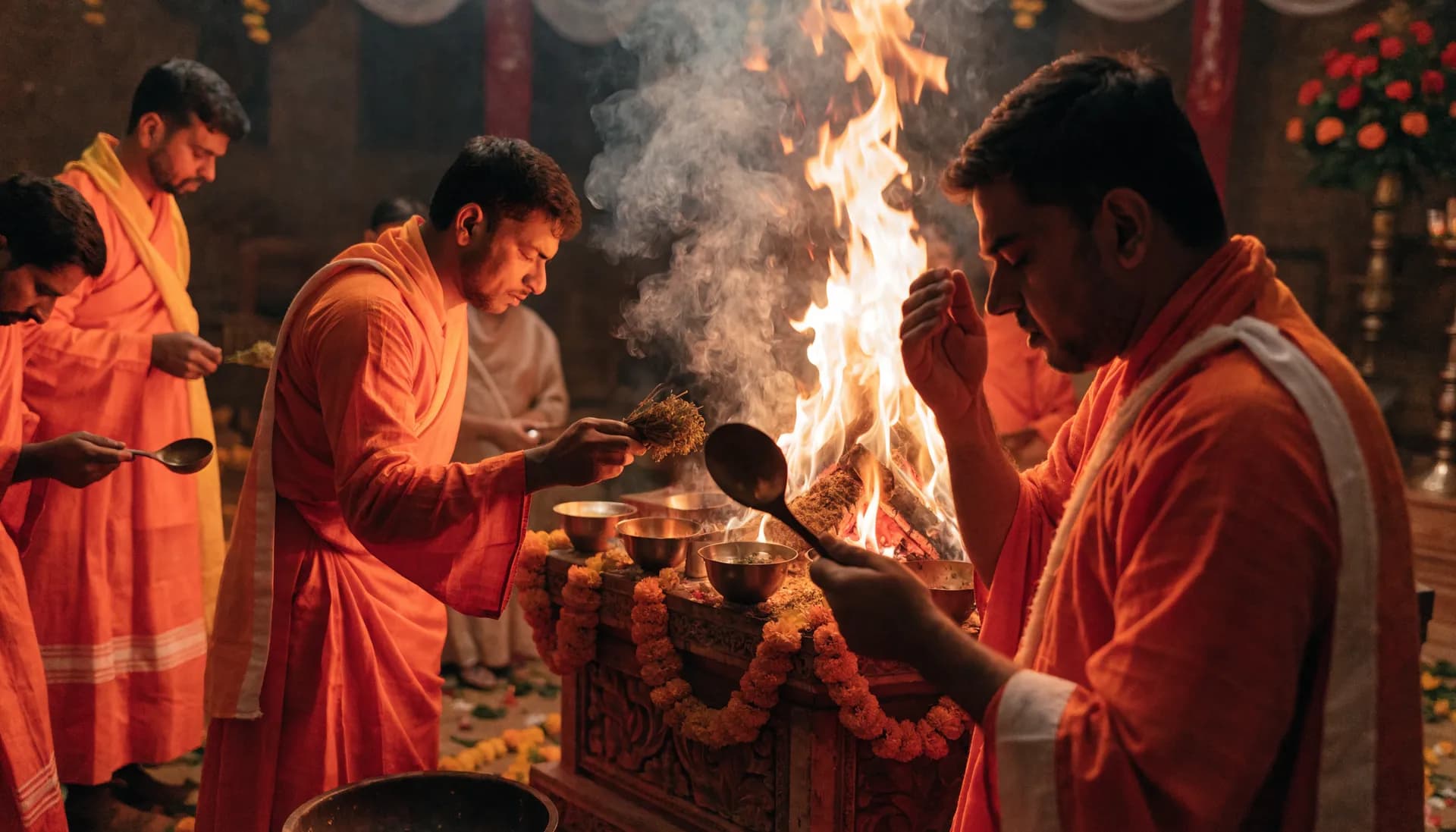
For many people a yagya is simply a fire ceremony glimpsed at a wedding or a festival. In the Vedic tradition it is something more deliberate: an offering made into consecrated fire with mantra, intention and gratitude, dedicating the act and its merit toward a stated purpose — a sankalp.
The parts of a yagya
A yagya has a recognisable structure. The kund, or fire altar, is prepared and purified. The purohit invokes the deities and states the sankalp on behalf of the sponsor by name and gotra. Offerings are made into the fire with specific mantras. It closes with aarti and the sharing of prasad. Each step has a reason, and none of it is improvised.
- Preparation and purification of the kund and materials.
- Sankalp — the intention stated in the sponsor's name.
- Ahuti — offerings into the fire accompanied by mantra.
- Purnahuti and aarti, followed by prasad.
How we perform a sankalp in your name
When you sponsor a yagya with us, a verified purohit performs it on the tithi you choose, taking your sankalp by name. We share the details and media of the ritual afterwards, so that even at a distance you can be present to the intention you set. Nothing is outsourced to an unknown hand.
The sankalp is the heart of the yagya. When we speak your name into the fire, your intention is the offering.
Booking a yagya, pooja or shradh through our Vedic Services is a way to fulfil a sankalp with confidence that it is done correctly. Contributions support both the ritual and the wider seva of the foundation.
Pandit Devdatt Shastri
Head Purohit, Vedic Services
Pandit Devdatt Shastri is a shastri-qualified purohit who guides Yashodalay Foundation's yagya, shradh and navgrah shanti rituals, ensuring each sankalp is performed with shastric care.
Shastri (Karmakanda) · 22 years performing Vedic rituals